post / 2023.11.28
Why I Play Galgames and a Brief Review of Eden* (Partial Spoilers)
This article was last updated on 2023-11-28. Please note that the content may no longer be applicable.
They Were Only Two, On The Planet.
I finished Eden* in the early hours this morning. After waking up, I’ve been in a daze all day—half due to lack of sleep, half because of the lingering emotional impact.
I barely paid attention in class. After P.E. this afternoon, I took a shower and tried to sleep. Despite being exhausted, I lay there for an hour without dozing off. Tenmon’s Sion kept playing in my mind, while scenes from the game flashed before my eyes like save points.
For me, playing visual novels (referring exclusively to all-ages titles here) is both an outward and inward journey.
As a hopeless anime fan, during the rough patches of my unsatisfactory real life, I reach out to visual novels for refuge—a fleeting escape to this untouched Eden. Even when stories feature profound suffering or cruel cycles, I know the writers will ultimately let me, as an outsider with godlike power, rewrite the predetermined bad endings. Or perhaps, amidst the sorrow, I’ll catch glimpses of existing beauty and march toward the future with hope. The worlds depicted in visual novels are places where hope always remains. This is truly eden (paradise).
While witnessing the diverse characters in these stories make their choices, I also turn inward to reflect: If it were me, what would I choose? Do I truly deserve such wonderful heroines? Am I like Eden*’s protagonist, failing to see what truly matters and muddling through my days?
Now, back to Eden*.
As a 2009 release from minori (now defunct), its visuals can only be described as “retro” by today’s standards, and its UI is nothing remarkable. Only its story and music elevate it to masterpiece status (and it will long be remembered as such).
The music is excellent, but the white screens during scene transitions and abruptly cut-off BGM always “perfectly” freeze my surging emotions in an awkward limbo, significantly hampering the experience.
But is Eden*’s story truly outstanding?
In terms of action, its combat scenes are merely passable—far inferior to titles like Fate/stay night (though Eden* isn’t action-focused, with its few fight scenes existing solely to highlight character conflicts).
As for slice-of-life elements, its depictions of daily routines neither transform the mundane into something magically entertaining (compared to today’s excellent moege) nor use them to create compelling conflicts.
Regarding narrative twists, the story contains few unpredictable suspense buildups. Most plot points, even the ending, become apparent after the first third—which is precisely Eden*’s terrifying strength. The lack of dramatic turns repeatedly thwarted my “reverse-thinking” predictions.
I kept expecting some “deus ex machina” to plunge the protagonists, fresh from one crisis, into new turmoil—or to alter their predetermined fate for a happy ending. But no, nothing happened.
After the morning glow fades, only the harsh light of reality remains. —The Three-Body Problem
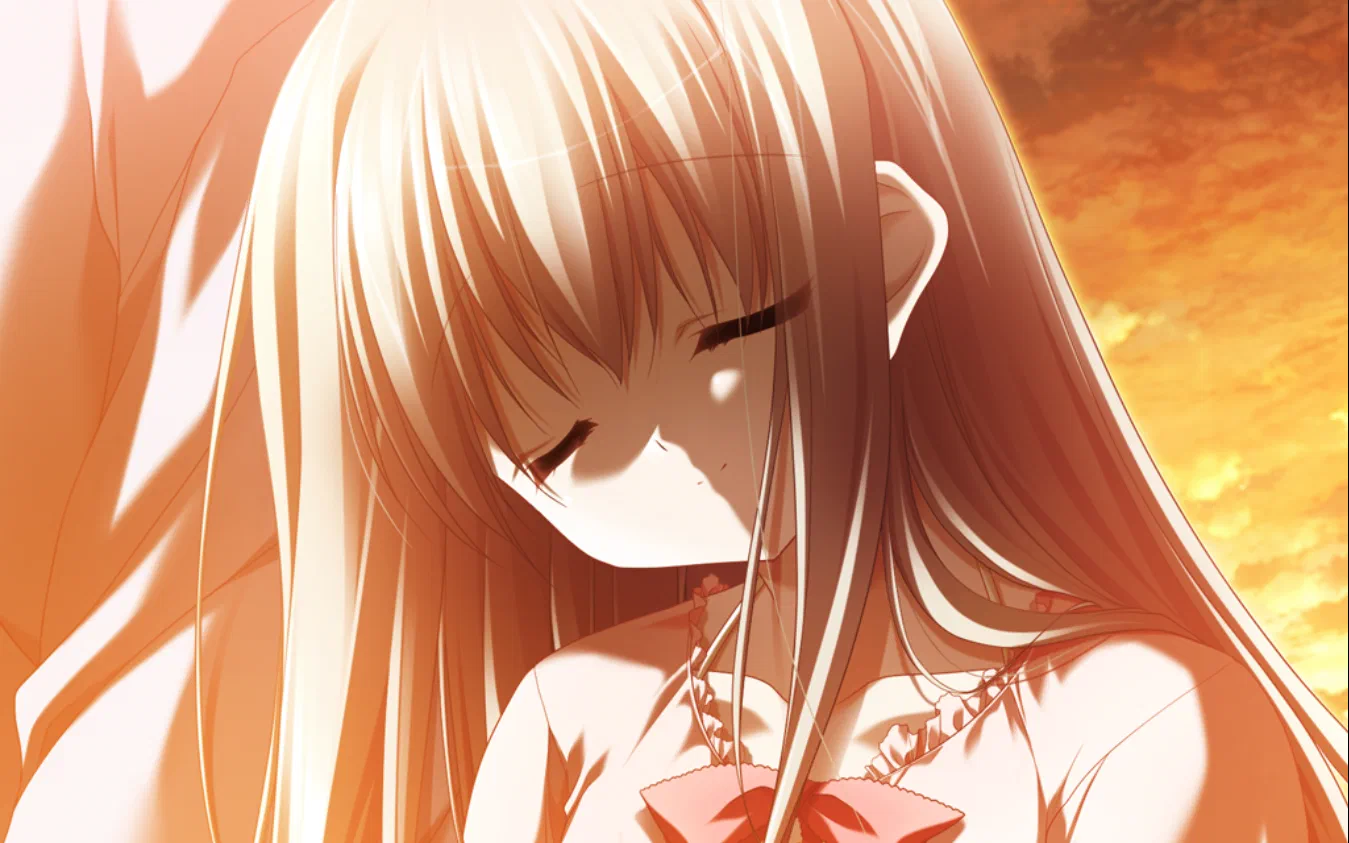
This is Eden*—it pushes everyone toward an inevitable conclusion with a “realism” uncharacteristic of visual novels. Countless times I screamed internally: “This can’t be right, can it? There must still be a way to…” For once, I—the “outsider”—felt utterly powerless. With its linear design and absence of choices, I could only watch as the caged bird broke free, spread her white wings to soar, then folded them forever in eternal slumber beneath the open sky.
Yet beyond this reality lies something seemingly less realistic.
Future, life, responsibility, freedom… Eden* presents these choices to me and Haruna Ryou not as in-game options, but as existential questions. It doesn’t preach about “correct” decisions—it simply reveals possibilities buried under heavy realities, delivering a wake-up call to young people like me, violated by this garbage society.
I once wallowed in the visceral grief of “The courtyard’s loquat tree was planted by my late wife the year she died, now its canopy spreads wide and tall.” But Eden* tells me:
When early summer comes, pick the loquats and taste them. She would be delighted.
Yes, I should water and fertilize that loquat tree, then joyfully eat its fruit every summer. The beautiful memories with Sion and others will remain as sweet as those loquats, year after year.
Looking back, is Eden*’s understated narrative truly good? Many have praised it already—my clumsy words add little. Years from now, I may forget names like Sion’s, but I’ll never forget:
They Were Only Two, On The Planet.
Author: 孤筝
Title: Why I Play Galgames and a Brief Review of Eden* (Partial Spoilers)
Published: 2023-11-28
Updated: 2023-11-28
License: CC BY-NC-SA 4.0
Sponsor / I took a taxi home for sixty or seventy dollars!


When will I have a drink and discuss the details again?