post / 2022.12.16
*Reflections on "Senren*Banka"*
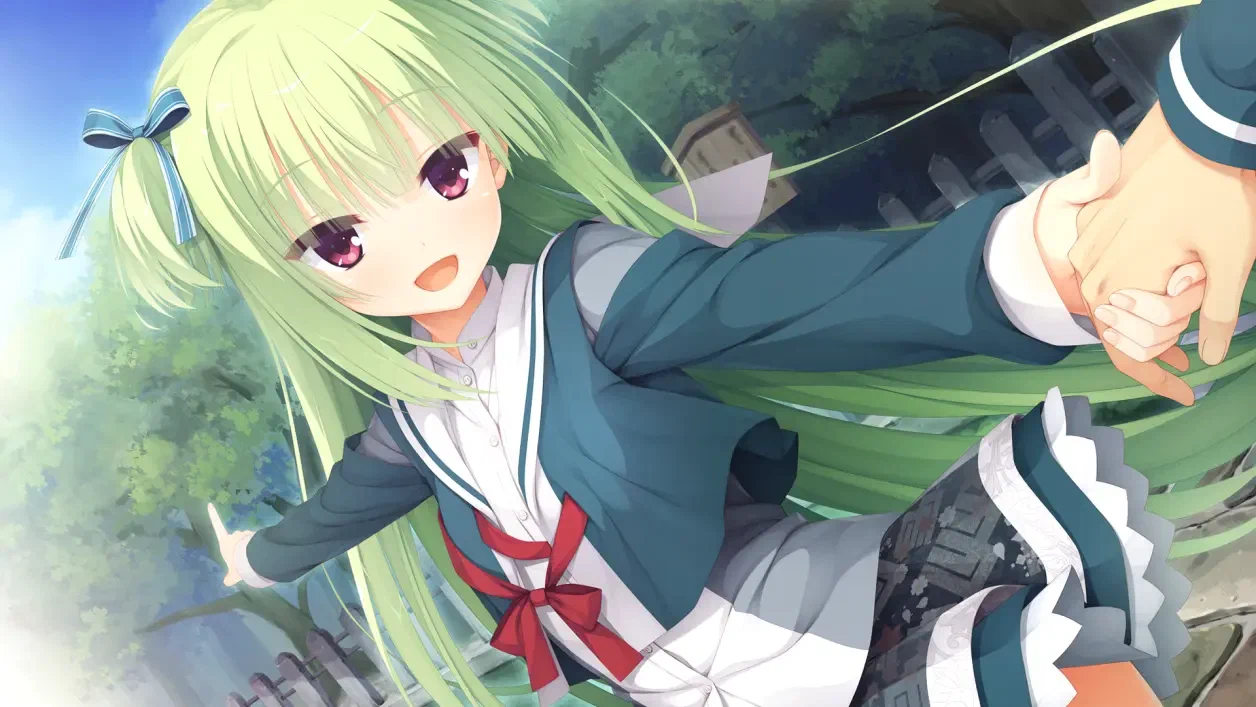
This article was last updated on 2022-12-16. Please note that the content may no longer be applicable.
Yesterday afternoon and evening, I spent eight hours straight completing the Murasame route. This morning, I went back to listen to the OST again—utterly unforgettable. It’s safe to say that Yuzusoft’s works are indeed a great escape from reality.
I’ve always believed that the story is the soul of a galgame, even for “butter” (eroge). Butter is first and foremost a game, and only then does it include H-content.
The ability of art (games being the ninth art) to evoke empathy is a crucial metric for judging its quality. Works that immerse readers (listeners/viewers/players) in their world, allowing them to grasp emotions and resonate with them, are, at the very least, outstanding for their time. Visual novels, like theater, music, literature, painting, and calligraphy, possess unique emotional carriers and expressive methods.
As a 2016 title, Senren*Banka boasts top-tier music, excellent UI (especially Yuzusoft’s flowchart system, which is incredibly convenient), and scenery/character art that still holds up as refined today (special shoutout to the dynamic chibi CGs—so kawaii, pat little Murasame’s head).
The protagonist is mostly sharp in both IQ and EQ, and the four heroines each have distinct, well-developed personalities. This is rare—many galgames suffer from weak writing, forcing characters into low-IQ/EQ roles to patch up plot holes, resulting in forgettable, cookie-cutter portrayals.
Regarding the story, I’ve only finished Murasame’s route, so I can’t comment on the others, but it’s genuinely outstanding. The H-scenes feel like natural progressions of the relationship, not forced for the sake of titillation. Across Murasame’s route (excluding the epilogue), the three H-scenes flow seamlessly, powerfully advancing both plot and emotional arcs, achieving true “mind and body” immersion for the player.
What’s even rarer is that the heroines’ routes are nearly equal in content. The seemingly “true heroine,” the poster girl Asakura Yoshino, doesn’t overshadow the others. Supporting characters don’t steal the spotlight but appear at key moments to set the mood and drive the plot forward without vanishing entirely. In contrast, Tricolour Lovestory repeatedly stabs Xiao Ju’s fans in both Xiao Ju’s and Wen Zhi’s routes, feeling gratuitously cruel—enough to make Ju fans want to strangle the writer.
Though much of the story is lighthearted slice-of-life, the interactions between these distinct personalities keep it engaging, never bland. The immortal Murasame, the pervy Mako, the earnest Yoshino, and the innocent Reina—vibrant characterizations, diverse appeal, and Japanese rural folklore give this sugar-coated moe fest broad appeal (which is why Senren*Banka is many players’ gateway galgame).
Now, for the flaws or regrets.
While the UI is well-designed, I wish it had progress bars for music and videos.
Multi-variant character sprites enrich dialogue expressions, but they lack the impact of dynamic CGs in H-scenes.
The game spreads the mystery of the崇神 (worshiped deity) across routes, incentivizing players to complete them all, but this leaves single-route players with gaps. Reina also gets less early development—a trade-off that’s hard to avoid.
The battle segments suffer from too few CGs and weak presentation (but for 50 yuan with six heroines and over twenty H-scenes, what more can you ask for?).
Murasame’s epilogue answer feels slightly forced, but as a classic fanservice finale, it’s unfair to be too critical.
Overall, Senren*Banka’s excellence is widely recognized by veteran galgame players—no need for excessive praise. It’s well worth buying. The Steam Autumn Sale is over, reverting to 88 RMB, but the dual-platform activation version on HIKARI FIELD’s site is just 50 RMB.
In recent years, truly outstanding new galgames are few and far between, while many acclaimed older titles are finally getting official Chinese releases (thanks to HIKARI FIELD and the countless veteran fan translators who paved the way for ACGN culture in China). From Tricolour Lovestory’s paid “true end” disaster to Mirror 2’s hypocrisy, and Ao Natsu Tracks’ official release coinciding with戲畫’s exit—butter and galgames have been declining for a while, stuck in a half-dead state, though not yet extinct.
Honeycomb’s kemonomimi lolis are great, but I’d prefer more galgames with emotionally gripping stories. Some say surface-level anime sells sex, while deeper works explore themes—but truly great titles blend both. Yosuga no Sora broke into the mainstream not just for its taboo sibling romance, but for its raw portrayal of ethical conflicts and societal pressures. Those moments—like穹妹’s desperate cries—are where galgames, as art, touch the heart.
Years from now, I might forget whether it’s “Murasame” or “Murasame,” “Xiao Ling” or “Xiao Ling,” but I’ll never forget that green-haired girl who waited 500 years under the moon. She gave me too much joy, warmth, and emotion.
Lastly, I’ll always love幼刀 (little sword).
***********SPOILERS BELOW**********
I couldn’t stop after starting yesterday. Initially treating it as pure “butter,” I mashed CTRL early on and stumbled into Murasame’s route without a guide. Then came the inevitable knife—not the sharpest, but catching me off-guard. When将臣 and Murasame first slept together, I nearly cried. 500 years—I’ll give her a normal girl’s happy youth! She endured 300 years as a sacrificial blade spirit (albeit through escape), so I’d swing that sword 3,000, 30,000, 300,000 times for her!
Later, I learned Murasame’s route is best saved for last—after her, other heroines pale in comparison. This is a common galgame flaw: non-harem routes breed guilt.
Early on, the blade spirit premise reminded me of Flowers -Le volume sur été-’s Rinka, and the deity lore felt similar too. The sacrificial wait then evoked Chinese Paladin’s Long葵—but eventually, Murasame became uniquely herself, a living, breathing girl. Rinka’s love was predestined across lifetimes; Murasame’s grew step by step, her early NEET traits making her feel real and relatable.
Though I claim to be a single-route player, I’ll likely try others eventually—otherwise, 50 yuan feels wasted (Yoshino, here I come!).
幼刀: “Men talk sweet, but in the end, they all just love pretty girls.jpg”
Author: 孤筝
Title: *Reflections on "Senren*Banka"*
Published: 2022-12-16
Updated: 2022-12-16
License: CC BY-NC-SA 4.0
Sponsor / I took a taxi home for sixty or seventy dollars!


When will I have a drink and discuss the details again?